
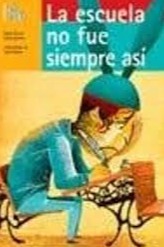
La escuela no siempre fue así
Prepárate para un viaje fascinante a través del tiempo con "La escuela no fue siempre así", un libro que te mostrará cómo ha evolucionado ese lugar que hoy conoces tan bien. Descorre el telón de la historia para descubrir que las aulas no siempre estuvieron llenas de alumnos, ni los maestros contaban con la preparación que tienen hoy. Acomódate en tu pupitre mientras exploras los orígenes de la educación, desde los primeros pueblos hasta la escuela contemporánea, donde la enseñanza se convirtió en un derecho universal. ¿Sabías que hubo épocas donde los niños usaban "orejas de burro", las mujeres no podían enseñar y el recreo, ¡esa pausa salvadora!, ni siquiera existía? Con textos ágiles y atractivas ilustraciones, este libro te invita a reflexionar sobre la importancia de la identidad grupal y el respeto por la diversidad, mientras descubres cómo los pupitres, las evaluaciones y hasta los castigos han cambiado. Además, encontrarás curiosidades sorprendentes y documentos de época que te harán pensar en el increíble camino que ha recorrido la escuela para llegar a ser lo que es hoy.
Sobre los autores
29 libros en la biblioteca
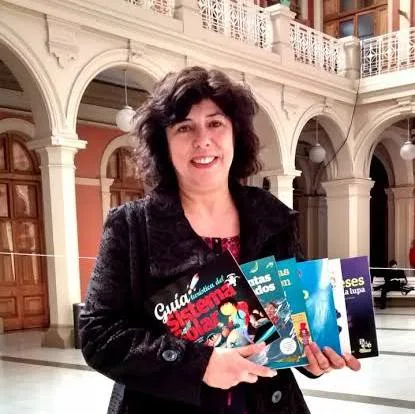
Carla Baredes es una destacada autora y editora argentina, reconocida por su significativa contribución a la divulgación científica para niños y jóvenes. Nació en la Ciudad de Buenos Aires en 1964. Se licenció en Física por la Universidad de Buenos Aires en 1992, dedicando sus primeros años profesionales a la investigación y la docencia universitaria. Posteriormente, se especializó en divulgación científica, lo que la llevó a incursionar en diversos medios culturales y educativos. En el año 2000, Carla Baredes cofundó Ediciones Iamiqué junto a la bióloga Ileana Lotersztain, una editorial que se ha consolidado como un referente ineludible en la publicación de libros informativos para el público infantil y juvenil en español. Como directora de Iamiqué, ha impulsado un enfoque que busca hacer la ciencia accesible y atractiva, abordando temas complejos con un lenguaje claro y cercano. Es autora de numerosos libros de divulgación, entre los que se cuentan "La escuela no fue siempre así", "Abuelas con Identidad", "El detective Intríngulis y el robo de la Mona Luisa", "Guía turística del Sistema Solar" y "La luz y los colores para los más curiosos". Su trabajo no solo se enfoca en la escritura, sino también en la traducción y compilación de obras, enriqueciendo el panorama de la literatura infantil y juvenil con contenidos educativos de alta calidad.
1 libro en la biblioteca
Pablo Pineau es un destacado historiador y pedagogo argentino, reconocido por sus significativas contribuciones al estudio de la historia, teoría y política de la educación. Se graduó como Profesor de Enseñanza Primaria de la Escuela Normal Nacional N° 2 “Mariano Acosta”, obtuvo la Licenciatura en Ciencias de la Educación y el Doctorado en Educación por la Universidad de Buenos Aires (UBA), y cursó una Maestría en Sociología en la Facultad Latinoamericana de Ciencias Sociales (FLACSO). Su formación académica y vasta experiencia lo han consolidado como una voz influyente en el ámbito educativo. Actualmente, Pineau se desempeña como Profesor Titular Regular de la cátedra de Historia de la Educación Argentina y Latinoamericana en la Facultad de Filosofía y Letras de la UBA, y en la ENS N° 2 “Mariano Acosta”. Ha ocupado la presidencia de la Sociedad Argentina de Historia de la Educación y la dirección del Departamento de Ciencias de la Educación de la UBA. Su trabajo incluye la dirección de proyectos de investigación, como el “Espacios de Memoria” en la ENS N° 2 “Mariano Acosta”, y el Doctorado en Educación de la Universidad Nacional de Tucumán. Ha sido becario Tinker como profesor invitado en el Teachers College de la Universidad de Columbia en Nueva York. La prolífica obra de Pablo Pineau abarca numerosos libros y artículos en revistas especializadas, tanto a nivel nacional como internacional. Es coautor de la reconocida obra "La escuela no siempre fue así", que aborda la evolución histórica de la institución escolar y sus prácticas pedagógicas, promoviendo una visión crítica y reflexiva sobre la educación. Su investigación se centra en problematizar las concepciones tradicionales de la escuela y explorar las tensiones y transformaciones que han moldeado los sistemas educativos en Argentina y Latinoamérica.
7 libros en la biblioteca
Javier Basile es un destacado autor e ilustrador argentino, reconocido por su valiosa contribución a la literatura infantil y juvenil, así como a la divulgación científica y social. A lo largo de su trayectoria, ha desarrollado una prolífica obra orientada a acercar el conocimiento histórico, geográfico y científico a las nuevas generaciones mediante un enfoque didáctico, ameno y riguroso. Entre sus publicaciones más notables se encuentran títulos emblemáticos como «La medicina no siempre fue así», «El baño no siempre fue así» y la «Guía turística de la tierra extrema», obras que combinan la narrativa educativa con el humor y la ilustración para estimular la curiosidad innata de los lectores jóvenes. La labor creativa de Basile destaca por su capacidad de transformar temas complejos de las ciencias naturales, sociales y exactas en contenidos accesibles y atractivos. Sus libros suelen estructurarse bajo colecciones temáticas que exploran la evolución de la cotidianidad, la ciencia y el entorno natural —incluyendo volúmenes sobre geografía, astronomía y sismología—. Gracias a su estilo distintivo, consolidado a través de numerosas publicaciones editoriales, el autor se ha posicionado como un referente indiscutido en el ámbito de la literatura didáctica de América Latina, fomentando el pensamiento crítico y el aprendizaje lúdico en la infancia.
Los lectores también disfrutaron


Comentarios
0 comentariosÚnete a la conversación
Inicia sesión para compartir tu opinión, responder a otros y votar comentarios.
Iniciar sesiónAún no hay comentarios sobre este libro
¡Sé el primero en compartir tu opinión!